Understanding the distinction between Reiki and the broader field of energy healing is essential for any client seeking holistic support. In my 10 years of consultancy within the wellness and digital health sectors, I have observed that these terms are often used interchangeably. However, they represent distinct methodologies with different training requirements and outcomes.
What Is Reiki?
Reiki is a specific, disciplined Japanese healing modality. It functions as a structured subset of the wider energy medicine landscape.
Origins and Principles of Reiki
Mikao Usui developed Reiki in the early 20th century in Japan. The practice is governed by five core Reiki precepts. These precepts focus on living in the present and maintaining emotional balance. Practitioners must adhere to these ethical foundations to maintain the integrity of the lineage.
How Reiki Works (Energy Channels and Attunement)
Reiki relies on the concept of spiritual energy (Rei-ki) being channeled through the practitioner to the recipient. Unlike other forms of energy healing, a Reiki practitioner must receive “attunements” from a Reiki Master. This process ostensibly opens the practitioner’s energy channels. This ensures they are not using their own personal vitality but are acting as a conduit for universal energy.
What Happens During a Reiki Session
A standard session lasts between 45 and 90 minutes. The client remains fully clothed while lying on a treatment table. The practitioner uses a series of fixed hand positions on or just above the body. The experience is typically passive for the client, focusing on deep relaxation and subtle shifts in temperature or tingling.
What Is Energy Healing?
Energy healing is an expansive “umbrella term.” It encompasses any therapy that manipulates the energetic circuits of the body to regain balance and facilitate the body’s self-healing mechanisms.
Definition and Types of Energy Healing
This category includes diverse practices such as bio-energy healing, chakra balancing, and Pranic healing. While acupuncture and acupressure are also forms of energy medicine, they focus on physical meridians. Most modern spiritual healers use a blend of these techniques based on the client’s specific blockages.
How Energy Healing Works
While Reiki is often hands-on, many energy healing styles are entirely non-touch. They work with the “biofield”—the electromagnetic field surrounding the human body. Practitioners identify “congested” energy and clear it to allow for smoother flow, often focusing on the seven main chakras.
What to Expect in an Energy Healing Session
Sessions are often more dynamic than Reiki. A practitioner might move around the room, use tools like crystals or sound bowls, or provide guided meditation practice during the clearing. You may be asked to participate more actively by describing sensations or visualisations.
Reiki vs Energy Healing: Key Differences Explained
Technique and Methodology
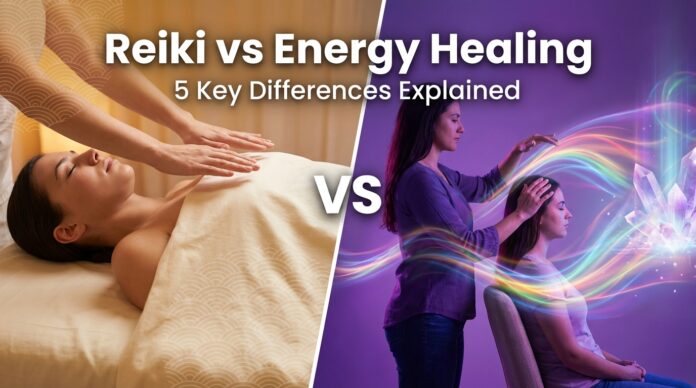
Reiki follows a rigid, systematised sequence of hand positions. General energy healing is more intuitive and diagnostic. An energy healer might spend an entire hour on a single joint or emotional centre, whereas a Reiki practitioner usually covers the whole body.
Practitioner Training and Certification
Reiki has a clear hierarchical structure: Level 1, Level 2, and Master/Teacher. Conversely, the training for energy healing is varied. Some healers are self-taught or “naturals,” while others hold diplomas in specific schools like Brennan Science or Pranic Healing.
Level of Standardisation
Reiki is highly standardised globally. A session in London will feel very similar to one in Delhi. Energy healing varies significantly between practitioners. This makes it harder to predict the exact experience but allows for more bespoke treatments.
Hands-On vs Non-Touch Approaches
Reiki practitioners traditionally use light touch. Many best energy healers work exclusively in the aura, several inches or feet away from the physical body.
Scope and Flexibility of Practice
Energy healers often incorporate external elements like essential oils or dowsing rods. Reiki purists generally avoid these additions, sticking strictly to the Usui system to ensure the “purity” of the channel.
Similarities Between Reiki and Energy Healing
Shared Philosophy of Energy Flow
Both believe that physical or emotional illness often stems from energetic imbalances. Both aim to move the client from a state of “dis-ease” to one of harmony.
Common Benefits Reported
Clients across both modalities consistently report reduced stress, improved sleep quality, and a sense of emotional lightness.
Use of Distance Healing
Both practices support long-distance healing. Because energy is not bound by physical proximity, a practitioner can facilitate a session for a client in another country. In professional practice, distance healing is increasingly popular for those with mobility issues or busy schedules.
Benefits of Reiki and Energy Healing
Physical Wellbeing
While not a replacement for medicine, these therapies can reduce the physiological markers of stress, such as cortisol levels. This supports the immune system and speeds up recovery from minor ailments.
Emotional and Mental Health
These sessions provide a “theta state” of relaxation. This helps in processing grief, anxiety, and the mental fatigue common in high-pressure professional environments.
Spiritual Growth
For many, these sessions act as a gateway to deeper self-awareness. They encourage a connection to something larger than the physical self, often fostering a sense of purpose.
Limitations, Risks and Misconceptions
What Energy Healing Can and Cannot Do
Energy work is a complementary therapy. It cannot “cure” cancer, mend broken bones, or replace life-saving surgery. It is a supportive tool for the “whole person,” not a targeted clinical fix for acute trauma.
Medical Considerations and When to Seek Professional Care
If you have a serious medical condition, always consult a doctor first. Professional energy healing practitioners will never ask you to stop taking prescribed medication or ignore medical advice.
Common Myths About Reiki and Energy Healing
The biggest myth is that the healer “gives” their energy to you. In reality, they facilitate your own body’s ability to heal itself. Another misconception is that you must be “religious” for it to work; the benefits are accessible regardless of personal faith.
Scientific Perspective: Is There Evidence?
What Research Says About Energy Healing
Clinical studies on Reiki show promising results for pain management and anxiety reduction in hospital settings. For example, some UK hospitals now offer Reiki to oncology patients to assist with the side effects of chemotherapy.
Placebo Effect vs Measurable Outcomes
Critics often cite the placebo effect. However, studies on animals and cell cultures—which are not susceptible to placebo—have shown changes in cell growth and wound healing when exposed to energy work.
Why Experiences Vary
Individual sensitivity to subtle energy varies. Factors like hydration, caffeine intake, and openness to the process can influence the perceived intensity of a session.
Which One Should You Choose?
Based on Your Goals
- Choose Reiki if you want deep relaxation, a standardised experience, and a quiet, meditative atmosphere.
- Choose Energy Healing if you have specific emotional traumas to clear or prefer a more tailored, intuitive approach.
Based on Your Beliefs and Comfort Level
If you are uncomfortable with being touched, look for spiritual healers who specialise in non-touch or distance healing. If you prefer a tradition with a clear lineage and history, Reiki is the superior choice.
Questions to Ask Before Booking a Session
- Where did you receive your training?
- Do you have professional insurance?
- How do you handle a “healing crisis” or emotional release during a session?
Cost, Accessibility and Session Formats
Average Cost of Reiki vs Energy Healing
In the UK, prices typically range from £45 to £90 per hour. Specialist practitioners or best energy healers with decades of experience may charge significantly more.
In-Person vs Distance Sessions
In-person sessions offer the benefit of a dedicated healing environment. Distance sessions offer convenience and allow you to work with experts globally, such as Jerry Sargeant Healer, regardless of your location.
How to Find a Qualified Practitioner
Always check for membership in professional bodies, such as the UK Reiki Federation or the CMA (Complementary Medical Association). Verify their reviews and ask for a brief discovery call to ensure your energies align before committing to a full session.